


جاك ليو
يونيو 12, 2026
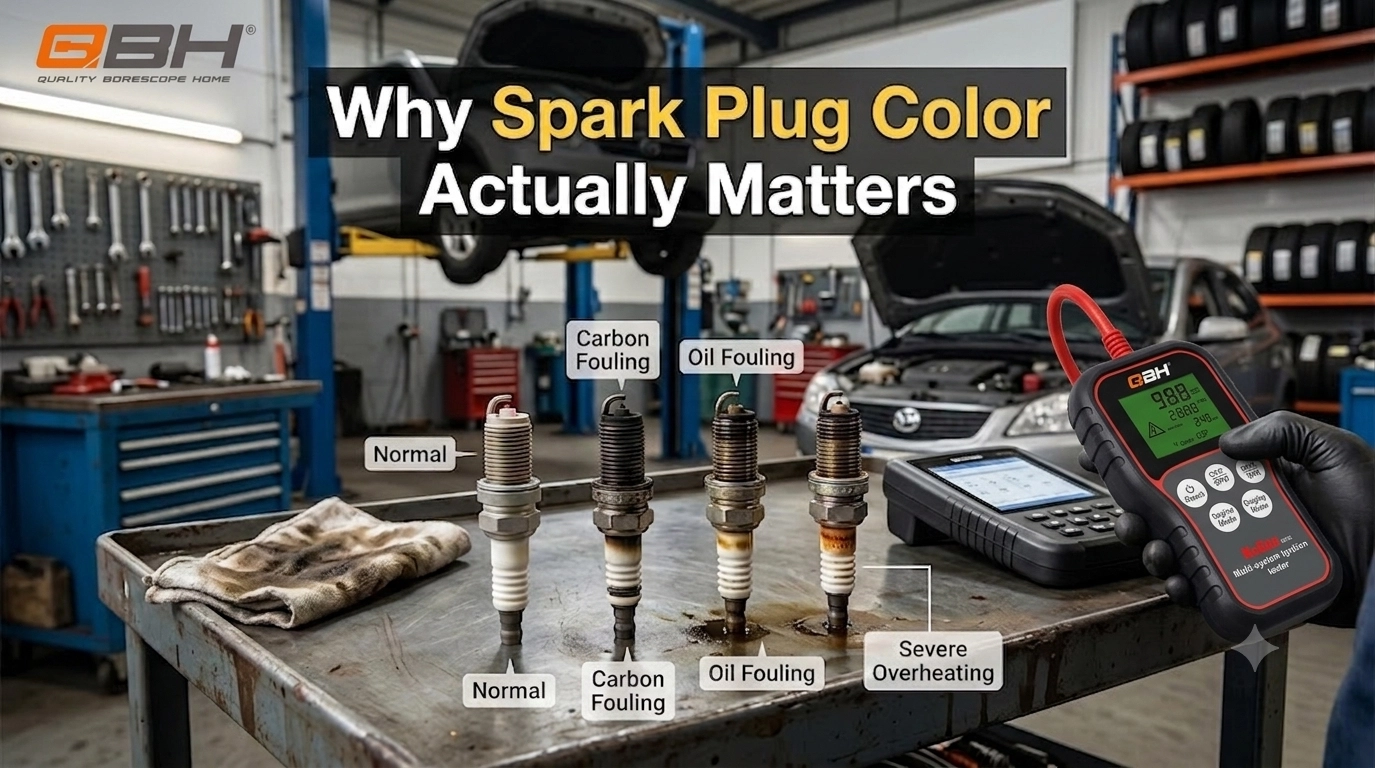
Why Spark Plug Color Actually Matters
Pull a spark plug from a misfiring engine and most people glance at it, decide it “looks fine,” and put it back. That’s a missed diagnostic opportunity — because a spark plug that has been living inside a combustion chamber for thousands of miles carries a detailed record of everything that’s been happening in that cylinder.
The color and condition of the firing end tells you whether the air-fuel mixture is correct, whether oil is getting past the rings or valve seals, whether the engine is running too hot or too cold, whether there’s coolant in places it shouldn’t be, and whether the ignition timing is right. None of that information shows up as a code on an OBD2 scanner unless the problem is already severe enough to trigger a fault threshold.
Spark plug reading is one of the oldest diagnostic skills in automotive repair — and one of the most underused. A good technician can pull four plugs from an engine, lay them side by side, and know more about what that engine needs than a scan tool will tell them in 20 minutes.
This guide covers every spark plug color and deposit condition you’re likely to encounter, what each one means, and what to do about it.
📘 جدول المحتويات
[ انقر لتوسيع ]
- Why Spark Plug Color Actually Matters
- How to Read a Spark Plug: What You’re Looking At
- The Spark Plug Color Chart: All Conditions Explained
- Light Grey or Tan — Normal
- Black and Sooty — Carbon Fouling
- Black and Wet — Fuel Fouling
- Oily Black — Oil Fouling
- White or Chalky — Lean Mixture or Overheating
- Blistered or Melted Electrode — Severe Overheating
- Wet but Not Oily — Coolant Intrusion
- Heavy Ash Deposits — Additive Buildup
- Glazed or Shiny — Intermittent High Heat
- Carbon Tracking on the Insulator — Ignition Leakage
- Worn or Eroded Electrode — End of Service Life
- What Spark Plug Reading Tells You That a Code Scanner Misses
- Spark Plug Color vs Engine Symptoms: Quick Reference
- Common Mistakes When Reading Spark Plugs
- Replace, Clean, or Investigate Further: The Decision Framework
- When Visual Inspection Isn’t Enough
- Get the Right Tools for the Next Step
- الأسئلة الشائعة
How to Read a Spark Plug: What You’re Looking At
Before working through the color chart, it helps to know which part of the plug you’re actually examining.
الـ firing end is the business end — the electrode tip and the ceramic insulator surrounding it. This is where combustion happens, and where color and deposit evidence accumulates. When someone talks about reading a spark plug, they mean the firing end.
The key areas to examine:
- Ceramic insulator tip: The small ceramic cone surrounding the center electrode. Color here reflects combustion temperature most accurately.
- Center electrode: The metal tip at the very end. Shape and erosion indicate service life and heat range suitability.
- Ground electrode: The curved arm that forms the spark gap. Deposits here indicate what’s entering the combustion chamber.
- Gap: The distance between center and ground electrode. Gap erosion is normal with age; abnormal gap widening or deposits indicate specific problems.
Always inspect plugs with good lighting — ideally natural light or a daylight-balanced work light. The difference between a light tan and a white-chalky color matters, and it’s easy to misread under a yellow shop light.
The Spark Plug Color Chart: All Conditions Explained
| Color / Condition | What It Means | السبب المحتمل | Action |
|---|---|---|---|
| Light grey / tan | Normal combustion | Correct mixture, correct heat range | No action needed |
| Black, dry, sooty | Carbon fouling — rich mixture or cold running | Rich AFR, short trips, wrong heat range | Check fueling, replace plug |
| Black, wet (fuel smell) | Fuel fouling — unburned fuel on plug | Flooded engine, failed ignition, injector leak | Check ignition system, injectors |
| Black, wet (oily) | Oil fouling — oil entering combustion | Worn rings, valve seals, PCV failure | Engine inspection required |
| White or light grey (powdery) | Lean mixture or overheating | Vacuum leak, lean AFR, wrong heat range | Check AFR, vacuum lines, heat range |
| Blistered / melted tip | Severe overheating — pre-ignition risk | Heat range too hot, timing too advanced, detonation | Replace immediately, find heat source |
| Wet, sweet smell | Coolant intrusion | Head gasket failure, cracked head | Pressure test cooling system urgently |
| White/grey powdery ash | Additive deposits — oil or fuel additives | High-additive oil, fuel additives | Change oil spec, reduce additives |
| Glazed / shiny brown | Intermittent high heat fusing deposits | Rich mixture + sudden hard acceleration | Replace plug, check fuel mixture |
| Worn / rounded electrode | Normal end-of-life wear | Age and mileage | Replace on schedule |
Light Grey or Tan — Normal Combustion
A spark plug in good health shows a light grey or tan color on the ceramic insulator, with minimal deposits on the electrode. The ground electrode may show slight wear but holds its original shape. The gap is close to the factory specification.
This color range indicates the engine is running at the correct air-fuel ratio, the plug’s heat range matches the engine’s operating temperature, and combustion is completing fully on every cycle.
If you pull plugs during a routine service and see this on all cylinders — you’re done. Reinstall or replace on schedule and move on. This is the target condition you’re trying to achieve after any fueling or ignition repair.
One nuance: slight color variation between cylinders is normal. Cylinders at the ends of an inline engine run slightly cooler than those in the middle. A small difference in shade doesn’t indicate a problem unless one cylinder is dramatically different from the rest.
Black and Sooty — Carbon Fouling
A dry black coating on the insulator tip and electrode, with a velvety or sooty texture, is carbon fouling. This is one of the most common plug conditions and one of the most informative.
Carbon accumulates when combustion is incomplete — meaning unburned carbon particles from the fuel are depositing on the plug rather than burning away cleanly.
What causes it:
The most common cause is a rich air-fuel mixture — too much fuel relative to air. This can come from a faulty oxygen sensor giving incorrect feedback, a stuck-open fuel injector, a failing mass airflow sensor, or a fuel pressure regulator holding pressure too high.
Running the engine primarily on short trips is another major contributor. When the engine never fully warms up, combustion temperatures stay too low to burn deposits off the plug. City driving with lots of cold starts and short runs is classic carbon-fouling territory.
A heat range mismatch — using a plug that runs too cold for the application — can also cause carbon fouling. A cold-rated plug doesn’t reach the self-cleaning temperature of around 450°C needed to burn deposits off the firing tip.
What to do:
Carbon fouling by itself won’t necessarily cause misfires immediately, but a heavily fouled plug has increased electrical resistance across the firing tip — eventually the spark can’t bridge the gap reliably and misfires begin. Replace the plugs and address the underlying fueling issue, or the new plugs will foul on the same timeline.
If all cylinders show similar carbon fouling, suspect a fueling or sensor issue affecting the whole engine. If one cylinder is worse than the others, that cylinder may have a leaking injector or a specific fueling problem.
Black and Wet — Fuel Fouling
A wet, black plug that smells of petrol is fuel-fouled — unburned liquid fuel has soaked the firing end rather than igniting. This is a more urgent condition than dry carbon fouling.
What causes it:
The most common scenario is a flooded engine — an engine that has been cranked repeatedly without starting, allowing raw fuel to accumulate. This is often found after a failed cold start, particularly in older vehicles or those with fueling problems.
A failed ignition component can also produce fuel fouling: if the coil or spark plug isn’t firing, the injector continues delivering fuel that never ignites. That fuel wets the plug and the cylinder walls. This is a critical diagnostic clue — a fuel-fouled plug on a specific cylinder points directly to an ignition failure on that cylinder.
Injector leakage — a stuck-open or dripping injector — can also fuel-foul a plug over time, even when the engine is running.
What to do:
Dry out the plug before testing or replacing. Remove it, allow the cylinder to air out (a few minutes with the plug hole open while cranking slowly), then reinstall a new plug. If the plug fuel-fouls again quickly, investigate the ignition system on that cylinder — this is the moment to use a spark plug tester to confirm whether the coil is actually firing.
Oily Black — Oil Fouling
An oil-fouled plug has a thick, wet black coating with a distinctly oily sheen — different from the dry soot of carbon fouling or the liquid gloss of fuel fouling. It often smells of burned oil. This is one of the more serious findings because it indicates engine oil is entering the combustion chamber.
What causes it:
Oil can enter the combustion chamber via two routes: past the piston rings (coming up from the crankcase) or past the valve stem seals (coming down from the cylinder head).
Worn or damaged piston rings allow oil to be drawn up into the combustion chamber on the intake stroke. This usually affects all cylinders to some degree, though cylinders with the most ring wear may show heavier fouling. Blue-grey smoke from the exhaust under acceleration is the accompanying symptom.
Worn valve stem seals allow oil to drip down the intake valve stems when the engine is idling or just starting. This tends to produce heavy blue smoke on startup that clears as the engine warms up — because the oil that pooled overnight drains down and burns off in the first few minutes of running.
A failed PCV (Positive Crankcase Ventilation) valve can also push crankcase oil mist into the intake, distributing oil contamination across all cylinders rather than concentrating it in one area.
What to do:
Oil fouling cannot be fixed by replacing the spark plugs alone — the underlying mechanical cause must be addressed. A leak-down test و compression test will help distinguish between ring wear and valve seal failure. These are mechanical repairs and may be significant in scope. If you find one cylinder with severe oil fouling while others are relatively clean, that cylinder’s rings or valve seals warrant specific investigation.
White or Chalky — Lean Mixture or Overheating
A white, chalky, or very light grey powdery appearance on the insulator tip indicates the plug is running hot — either because the combustion temperature is elevated or because the plug’s heat range is too hot for the application.
What causes it:
A lean air-fuel mixture — too much air relative to fuel — burns hotter than a correct mixture. Lean conditions can come from vacuum leaks (unmeasured air entering the intake after the MAF sensor), a failing fuel pump, clogged fuel injectors, or a faulty fuel pressure regulator holding pressure too low.
Incorrect ignition timing — timing too far advanced — also raises combustion temperatures and can whiten plugs over time.
A heat range mismatch in the opposite direction from carbon fouling: using a plug rated too hot for the application runs the firing tip at elevated temperatures.
The danger: A plug running consistently white is approaching the temperature range where الاشتعال المبكر becomes a risk. Pre-ignition — where the air-fuel mixture ignites before the spark from heat alone — causes detonation, which can destroy pistons, bearings, and cylinder walls rapidly.
What to do:
Don’t ignore white plugs. Check for vacuum leaks with a smoke machine or carburetor cleaner spray. Verify fuel pressure. Check ignition timing. If no obvious cause is found, consider whether the heat range is correct for the engine’s state of tune. Replace plugs and monitor closely.
Blistered or Melted Electrode — Severe Overheating
A plug with a blistered ceramic insulator, a melted or eroded center electrode tip, or visible pitting on the ground electrode has experienced extreme overheating — temperatures well beyond the plug’s design range.
This is a red flag that should stop further running of the engine until the cause is identified.
What causes it:
Detonation (knock) is the most common culprit. When the air-fuel mixture detonates uncontrollably rather than burning in a controlled front, the resulting pressure spike creates intense localized heat. Sustained detonation destroys plugs quickly and damages pistons if left unchecked.
Pre-ignition — the mixture igniting from a hot spot in the combustion chamber before the spark — produces even higher temperatures than detonation and can melt electrode material within minutes of onset.
Other causes include cooling system failure (low coolant, failed thermostat, blocked passages reducing heat dissipation), incorrect fuel octane for the engine’s compression ratio, and timing too advanced for current operating conditions.
What to do:
Replace the plug immediately — a blistered plug is already compromised and will fail soon. But the more important step is identifying the heat source. Run a cooling system pressure test. Check knock sensor function and ignition timing. Verify fuel octane is appropriate. Continuing to run the engine with the underlying cause unresolved risks piston damage that will cost far more than an ignition repair.
Wet but Not Oily — Coolant Intrusion
A plug that’s wet with a slightly sweet smell and has a whitish or greenish residue on the electrode or insulator has coolant on it. This is one of the most serious findings in a spark plug inspection.
What causes it:
Coolant in the combustion chamber almost always means a failed head gasket — the gasket between the cylinder head and engine block that seals coolant passages from combustion chambers. A breach in the gasket allows coolant to leak into the cylinder on the intake or compression stroke.
A cracked cylinder head is less common but produces identical plug symptoms.
How to confirm:
A coolant-wet plug should trigger an immediate cooling system pressure test. The system is pressurised and monitored for pressure drop — a drop indicates a leak somewhere in the system. A combustion gas test (using a chemical test kit in the coolant reservoir) checks for combustion gases in the coolant, which confirms head gasket breach even before visible coolant loss occurs.
White smoke from the exhaust — particularly thick white smoke that appears after the engine warms up — is the classic accompanying symptom. The exhaust may also smell sweet from burning coolant.
What to do:
This is not a driveable condition. Coolant in the combustion chamber can cause hydraulic lock — coolant doesn’t compress, and if enough accumulates in a cylinder it will bend a connecting rod when the piston tries to compress it. Have the vehicle assessed immediately. Do not continue running a vehicle suspected of head gasket failure.
Heavy Ash Deposits — Additive Buildup
Light ash deposits are normal — trace amounts of combustion byproducts accumulate on any plug over time. Heavy white or grey ash deposits that build up on the ground electrode and around the firing tip indicate oil or fuel additive accumulation.
What causes it:
Some engine oils contain higher levels of phosphorus, zinc (ZDDP), or calcium-based additives — compounds used as anti-wear agents. When oil burns in the combustion chamber (via minor valve seal seepage or ring blow-by at normal wear levels), these additives leave ash residue on the plug.
High-mileage engine oils formulated with extra seal conditioners and friction modifiers tend to produce more ash than standard oils.
Certain fuel additives — particularly deposit-control additives added in high concentrations — can also leave residue.
What to do:
Light ash deposits with an otherwise normal plug color are low concern. Heavy ash buildup that is bridging the gap or coating the insulator will eventually cause misfires by creating an alternative current path or increasing firing voltage requirements. Switch to an oil with lower additive content (check ZDDP levels if running a performance or high-compression engine). Replace plugs and monitor.
Glazed or Shiny — Intermittent High Heat
A plug with a glazed, shiny brown or yellowish gloss on the insulator tip has experienced deposit melting — combustion deposits that accumulated during low-temperature running were suddenly subjected to high heat and fused into a smooth, glass-like coating.
What causes it:
The classic scenario is an engine that does a lot of low-load, low-RPM driving (city traffic, short trips) that produces carbon deposits on the plug, followed by a period of sustained high-load driving (highway, hard acceleration). The high heat event melts the accumulated deposits into a glaze.
A glazed insulator is electrically conductive when hot — the glaze provides a current path across the insulator surface, causing the spark to track along the insulator rather than jumping the gap. This produces intermittent misfires that appear under hard acceleration and disappear at idle.
What to do:
A glazed plug cannot be cleaned and returned to service — the glaze is fused to the ceramic and won’t come off without damaging the insulator. Replace the plug. If the underlying driving pattern is unavoidable, consider a slightly hotter plug heat range to prevent deposit accumulation in the first place.
Carbon Tracking on the Insulator — Ignition Leakage
Carbon tracking is a fault condition that looks different from other deposit types and gets misdiagnosed more often than it should. Rather than a color change across the whole firing tip, it appears as thin black lines running along the surface of the ceramic insulator — branching marks that look almost like cracks but are actually conductive carbon paths burned into the surface.
What causes it:
Carbon tracking happens when high-voltage current from the ignition system finds a path across the insulator surface rather than jumping the spark gap as intended. A tiny crack in the ceramic, a pinhole in the plug boot, moisture on the insulator surface, or a contaminated insulator gives the current an easier path to ground than crossing the gap.
The current arcs along this easier path repeatedly, burning carbon into the surface each time — which makes the path even more conductive, which makes it worse. Once carbon tracking is established, it tends to get worse rapidly rather than staying stable.
Why it’s commonly misdiagnosed:
The plug may look otherwise normal. The electrode condition may be fine. The resistance check on the plug may pass. The misfire appears intermittently — often when the engine is cold or the ignition system is under higher voltage demand. Many technicians replace the coil when the real issue is a tracked insulator on the plug, or a damaged coil boot that’s allowing the tracking to continue onto the plug.
Carbon tracking that originates on the coil boot — the rubber sleeve connecting a COP coil to the spark plug well — is particularly common and often invisible from outside. The tracking is on the interior surface of the boot. Remove the coil, pull the boot out of the plug well, and shine a light inside. Any dark branching lines indicate boot failure.
What to do:
A carbon-tracked plug cannot be cleaned and returned to service. Replace both the plug and the boot if tracking is present on either. If the tracking originated from a damaged boot, check the coil itself for signs of arcing or insulation damage — a failing boot puts electrical stress on the coil above it.
For a deeper look at coil boot failure and how it connects to ignition coil diagnosis, see our complete ignition coil tester diagnostic guide.
Worn or Eroded Electrode — End of Service Life
A plug at the end of its service life shows a rounded center electrode — the originally sharp, square edge has worn into a dome shape — and a ground electrode that may show pitting or recession on the inner face. The gap has widened beyond spec.
This is normal wear, not a fault condition. Electrodes erode gradually because every spark event removes a tiny amount of electrode material. Over tens of thousands of miles, this adds up.
Why electrode condition matters:
A worn electrode requires higher voltage to fire than a fresh plug with a sharp edge. The sharp edge concentrates the electrical field, reducing the voltage needed to initiate the spark. A rounded electrode increases the ignition voltage requirement — a coil that was coping fine with fresh plugs may begin to misfire with worn ones.
This is the mechanism behind the well-documented link between worn plugs and premature coil failure: the coil works harder to overcome the elevated firing voltage, accelerating its own insulation breakdown. Replacing coils without replacing plugs on the same service is a common workshop mistake.
Replacement intervals:
Standard copper plugs: 20,000–30,000 miles. Platinum plugs: 60,000 miles. Iridium plugs: 80,000–100,000 miles. These are maximums, not minimums — if symptoms appear earlier, inspect and replace sooner.
What Spark Plug Reading Tells You That a Code Scanner Misses
An OBD2 scanner reads fault codes generated when the ECU detects a parameter outside its programmed tolerance. That means a problem has to be bad enough, and consistent enough, to cross the ECU’s threshold before a code appears.
Spark plug condition, by contrast, accumulates evidence continuously from the moment the plug is installed. A plug that’s been running slightly rich for 15,000 miles will show it — even if the fueling deviation was never large enough to trigger a P0172 code. A valve seal that’s been seeping oil slowly will show it on the plug long before oil consumption becomes noticeable on the dipstick.
Specific things spark plug reading reveals that scanners miss:
- Intermittent lean conditions at specific load points (white deposits concentrated on one side of the insulator, indicating lean during high-load events)
- Early-stage valve seal wear before measurable oil consumption
- Cylinder-specific fueling differences from injector wear that are within code thresholds
- Heat range suitability — whether the plug is running at the right temperature for the application
- PCV system health — ash deposits across all cylinders pointing to crankcase oil mist ingestion
This is why experienced technicians include a spark plug inspection as part of any engine diagnostic process, not just when a plug-related code is present. The plugs are a free window into the combustion chamber — using them costs nothing beyond the time to remove them.
Spark Plug Color vs Engine Symptoms: Quick Reference
When a customer describes a symptom and you’re about to pull plugs, this table maps what you’re likely to find:
| Plug Condition | Customer Symptom | Most Likely System |
|---|---|---|
| Light tan — normal | No complaint, or routine service | All systems operating correctly |
| Black, dry, sooty | Poor fuel economy, black smoke, rough idle | Fueling (rich mixture), sensor, heat range |
| Black, wet, fuel smell | Won’t start, single cylinder misfire code | Ignition failure on that cylinder, injector |
| Black, oily sheen | Blue-grey smoke, oil consumption, low compression | Piston rings, valve seals, PCV |
| White or chalky | Overheating, lean stumble, power loss under load | Vacuum leak, fuel delivery, heat range |
| Blistered / melted | Knock, power loss, potential piston damage | Detonation, pre-ignition, cooling failure |
| Wet, sweet smell | White exhaust smoke, coolant loss, overheating | Head gasket, cracked head — urgent |
| Carbon tracking on insulator | Intermittent misfire, worse when cold or wet | Plug insulator crack, coil boot failure |
| Glazed, shiny brown | Misfire under acceleration, fine at idle | Deposit melting from mixed driving cycle |
| Worn / rounded electrode | Harder starting, slight misfire, reduced economy | Normal end-of-life wear — replace on schedule |
This table works in both directions: pull the plug and match the condition to a system, or start from the customer complaint and know what you’re looking for before the plug is out.
Common Mistakes When Reading Spark Plugs
Even experienced technicians make these errors. They’re worth knowing because they lead to misdiagnosis and unnecessary parts replacements.
Reading plugs immediately after cold start
The first few minutes of running after a cold start produce condensation and incomplete combustion as the engine comes up to temperature. A plug pulled right after a cold start will often look wetter and darker than its actual running condition. Always read plugs after a full warm-up cycle at normal operating temperature if you want an accurate picture.
Reading plugs after extended idling
The reverse problem: an engine idled for a long period runs at low combustion temperature, which promotes deposit accumulation and moisture. A plug that looks carbon-fouled after a 20-minute idle may look normal after a drive cycle. Read plugs after a representative drive — not a parking lot idle.
Judging all cylinders by one
One cylinder can have a completely different plug condition from the others due to a cylinder-specific fueling fault, injector issue, or mechanical problem. Always pull all plugs and compare them. A single carbon-fouled plug in an otherwise normal set tells a different story than six carbon-fouled plugs.
Trying to clean and reuse fouled plugs
Carbon deposits can be brushed off a plug, and fuel fouling can be dried out. But cleaned plugs re-foul faster than new ones — the cleaning process leaves microscopic surface damage that accelerates deposit adhesion. Glazed plugs cannot be cleaned at all. In a professional workshop context, the labor cost of removing, cleaning, reinstalling, and then removing and replacing again when the plug fouls quickly exceeds the cost of just fitting new plugs the first time.
Mistaking normal wear color for a fault
A plug that has done 40,000 miles will be darker and more deposited than a new plug, even if the engine is running perfectly. Compare plug condition against known-good reference plugs of similar mileage, not against the appearance of a new plug.
Ignoring the boot and well when pulling COP plugs
The coil boot and plug well can hold important diagnostic information — oil in the well, carbon tracking inside the boot, or moisture. Many technicians pull the plug, look at it, and reinstall without checking the boot interior or the well condition. This misses boot-related ignition faults entirely.
Replace, Clean, or Investigate Further: The Decision Framework
After reading the plugs, the decision tree is:
Replace immediately (no further debate):
- Blistered or melted electrode — engine damage risk is active
- Carbon tracking on insulator — will not recover
- Glazed insulator — glaze cannot be removed safely
- Coolant contamination — underlying cause must be fixed regardless
- Gap worn beyond 150% of factory spec
Replace and investigate the cause:
- Oil fouling — new plug will foul again without mechanical repair
- Fuel fouling on a specific cylinder — ignition system on that cylinder needs testing
- Consistent white/chalky across all cylinders — lean or heat condition needs root cause
- Carbon fouling across all cylinders — fueling system needs investigation
Can continue temporarily, monitor closely:
- Light carbon fouling with recent plug service — may be driving pattern related
- Minor ash deposits not bridging the gap — switch oil spec and recheck at next service
- Normal wear approaching (but not at) replacement interval — schedule replacement soon
Replace plug, then retest the system:
- Any time a plug replacement changes the symptom pattern, the plug was contributing but may not be the only fault
- If the symptom returns within one service interval, the root cause hasn’t been addressed
When Visual Inspection Isn’t Enough
A spark plug color reading tells you what happened inside the combustion chamber. It doesn’t always tell you which component caused it.
A carbon-fouled plug tells you combustion is incomplete — but it doesn’t distinguish between a rich injector, a cold thermostat, a failing MAF sensor, or a wrong heat range plug without further investigation.
An oil-fouled plug tells you oil is entering the chamber — but it doesn’t tell you whether the source is rings, valve seals, or PCV without a leak-down test.
This is where dedicated diagnostic tools complete the picture. When spark plug color points to an ignition-related problem — fuel fouling from a dead cylinder, or a plug that’s misfiring under load — the next step is testing the ignition system directly:
- For spark plug condition and firing voltage: a spark plug tester
- For ignition coil resistance and coil health: our complete ignition coil testing guide
- For multimeter-based ignition circuit testing: how to test ignition system with multimeter
- For situations where the coil tests fine but the misfire continues: ignition coil good but no spark — what to check next
Spark plug reading narrows the field. Instrument-based testing confirms the fault.
🔍 Found a Problem in Your Spark Plug Inspection? Get the Right Tool to Confirm It
A spark plug that shows carbon fouling, oil contamination, or fuel fouling is pointing at a specific system. The next step is confirming which component in that system has failed — and that requires the right diagnostic tool for the job.
Whether you’re a technician diagnosing a single vehicle or a distributor sourcing ignition diagnostic equipment for a workshop network, QBH’s range of ignition testing tools covers spark plug testers, COP coil analyzers, and multi-system ignition analyzers built for professional use.
- تقييم مجاني للعينات قبل تقديم الطلبات بالجملة
- Multi-system coverage: COP, DIS, plug-near-coil, magneto
- OEM and private label options available for distributors
👉 تصفح مجموعة أدوات تشخيص نظام الإشعال →
📩 البريد الإلكتروني: [email protected]
🌐 الموقع الإلكتروني: www.qbh-borescope.com
💬 واتساب: +86 19924388659
الأسئلة الشائعة
Q: What does a normal spark plug look like?
A healthy spark plug has a light grey or tan ceramic insulator with minimal deposits and a relatively sharp center electrode. The ground electrode shows slight wear but no pitting, melting, or heavy buildup. If all plugs look like this, the engine is running correctly and the plugs are in serviceable condition.
Q: What does a black spark plug mean?
A dry black sooty plug indicates carbon fouling — typically from a rich air-fuel mixture, excessive short-trip driving, or a plug running too cold for the application. A wet black plug with an oily sheen means oil is entering the combustion chamber via worn rings or valve seals. A wet black plug that smells of fuel indicates ignition failure or a flooded condition on that cylinder.
Q: Can you clean and reuse a fouled spark plug?
Carbon-fouled plugs can sometimes be cleaned and returned to service in an emergency, but it’s not recommended for long-term use — the cleaned plug will re-foul faster than a new one, and the cleaning process can damage the ceramic insulator. Glazed plugs cannot be cleaned effectively. Oil-fouled plugs should always be replaced, with the mechanical cause addressed first.
Q: What does a white spark plug mean?
A white or chalky plug indicates the engine is running lean (too much air, not enough fuel) or the plug is operating at too high a temperature. Common causes include vacuum leaks, low fuel pressure, a failing MAF sensor, or a plug with too-hot a heat range for the application. White plugs running consistently hot risk pre-ignition damage — this should be investigated promptly.
Q: How often should spark plugs be inspected?
Even if you’re not replacing them, pulling and inspecting plugs every 20,000–30,000 miles gives useful diagnostic information about engine health. If symptoms appear — rough idle, poor fuel economy, hard starting — inspect plugs immediately regardless of mileage. The inspection takes 15 minutes and can save hours of downstream diagnosis.
Q: What does the spark plug color tell me about my catalytic converter?
Indirectly, it tells you a lot. A heavily carbon-fouled or fuel-fouled plug on a specific cylinder means unburned fuel is passing through that cylinder into the exhaust. Unburned fuel reaching the catalytic converter ignites inside it, causing the converter to overheat and degrade. If you find fouled plugs and the vehicle also has a P0420 code (catalyst efficiency below threshold), the converter damage is likely connected to the ignition or fueling problem that caused the fouled plugs.
Q: My plug looks normal but the engine still misfires. What now?
Visual inspection is the starting point, not the complete diagnosis. A plug can look normal — correct color, normal deposits — while still failing under load or at operating temperature due to internal cracking of the ceramic, electrode wear at the gap limit, or ignition system issues upstream of the plug. If the plug looks fine, the next step is testing the ignition coil and spark circuit directly. See our guide on ملف الإشعال سليم ولكن لا توجد شرارة for the next diagnostic steps.
خط الإنتاج


علامة المقالة


اترك تعليقًا
مقالات ذات صلة

Quick answer: An ignition analyzer tests the spark itself while the engine is running. Instead of only telling you whether a spark exists, it shows [...]

Las Vegas, November 3–5, 2026: ShenZhen QBH Technology Development Co., Ltd. will bring a new selection of automotive inspection, diagnostic and workshop tools to AAPEX [...]

Quick answer: A micro borescope helps inspectors see inside small passages, blind cavities, cross-drilled holes and other difficult-to-access areas in castings and machined parts. It [...]
Quick answer: An ignition analyzer tests the spark itself while the engine is running. Instead of only telling you whether a spark exists, it shows [...]
Las Vegas, November 3–5, 2026: ShenZhen QBH Technology Development Co., Ltd. will bring a new selection of automotive inspection, diagnostic and workshop tools to AAPEX [...]
Quick answer: A micro borescope helps inspectors see inside small passages, blind cavities, cross-drilled holes and other difficult-to-access areas in castings and machined parts. It [...]

Table of Contents Industrial Borescope Maintenance: The Short Answer Why Maintenance Matters Pre-Use Inspection Checklist How to Clean an Industrial Borescope Safe Probe and Insertion-Tube [...]
